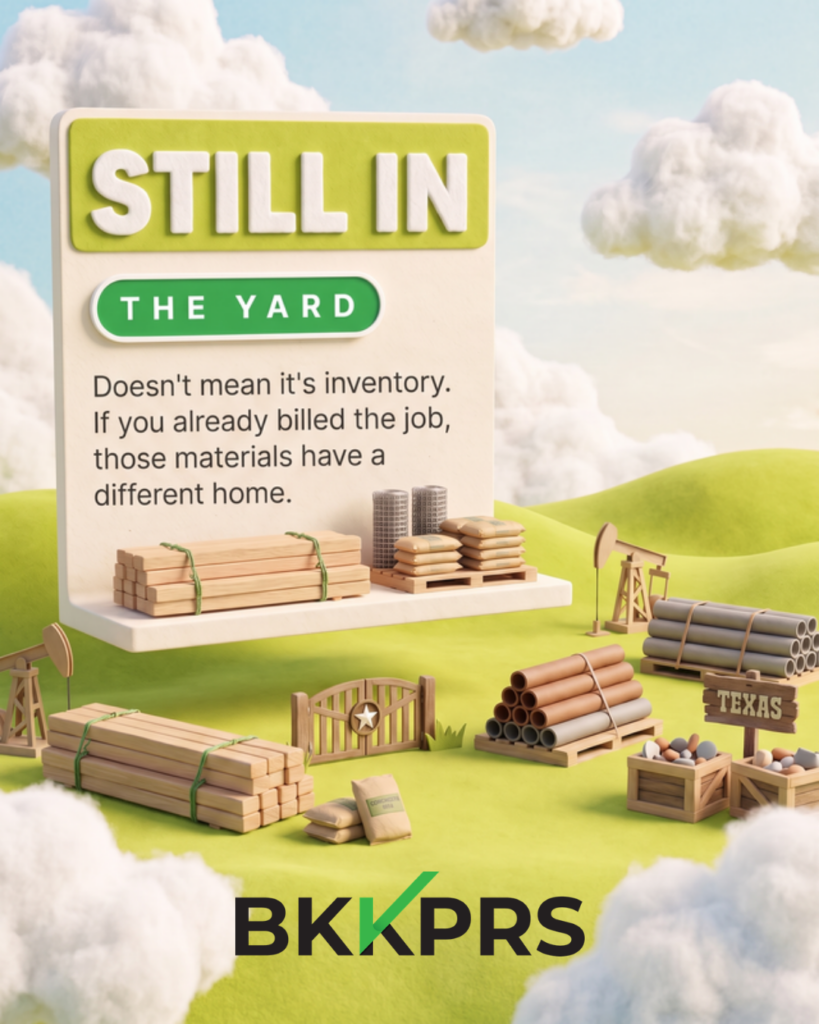
A stack of lumber on the pad looks like a spare asset. Often it isn’t. If you already billed the job, or firmly committed those materials to a current job, they belong in the job cost story. Not in “inventory we still own.”
When the yard and the job cost disagree, Hill Country builders make pricing and cash calls on the wrong pile. Making the yard match the jobs is books hygiene, not a market-stat claim.
Inventory is what’s still yours
Open stock waiting for a future job is a real balance-sheet asset. It has not been billed. It has not been committed. It is available for the next bid. That is inventory in the ordinary books sense.
IRS small-business guidance treats merchandise held for sale as inventoriable when accounting for it is needed to clearly show income. The management point for a yard is simpler: if it is still yours for a future job, keep it in inventory. If it already belongs to a job’s story, don’t.
Billed materials tell a job story
Materials charged or committed to a job are job cost even if the last stick is still on site. Leaving them as open inventory while the job already carries them double-counts the story. The yard looks fat. The job looks light. Margin decisions follow the wrong picture.
Where the books get sideways
A casual yard walk invents a second inventory. WIP or job cost reports show thin materials while the pad looks full. Owners cut prices or delay purchases based on a pile the customer already owns on paper.
The fix is reconciliation, not a bigger forklift. Match tagged stock to open jobs. Move billed or committed materials out of open inventory and into the job.
A Friday yard habit
Walk the yard against the open-job list. Ask one question per pile: still ours for later, or already on a job? Update the books the same week you move the material. Soft discipline beats a year-end surprise.
Tie the yard to the jobs
Make the yard match the jobs.
Sources
IRS Publication 538, Accounting Periods and Methods (inventories and methods that clearly reflect income): https://www.irs.gov/publications/p538
IRS Publication 334, Tax Guide for Small Business (keeping inventories; cost of goods sold framing): https://www.irs.gov/publications/p334
IRS Publication 334 PDF (Inventories section): https://www.irs.gov/pub/irs-pdf/p334.pdf