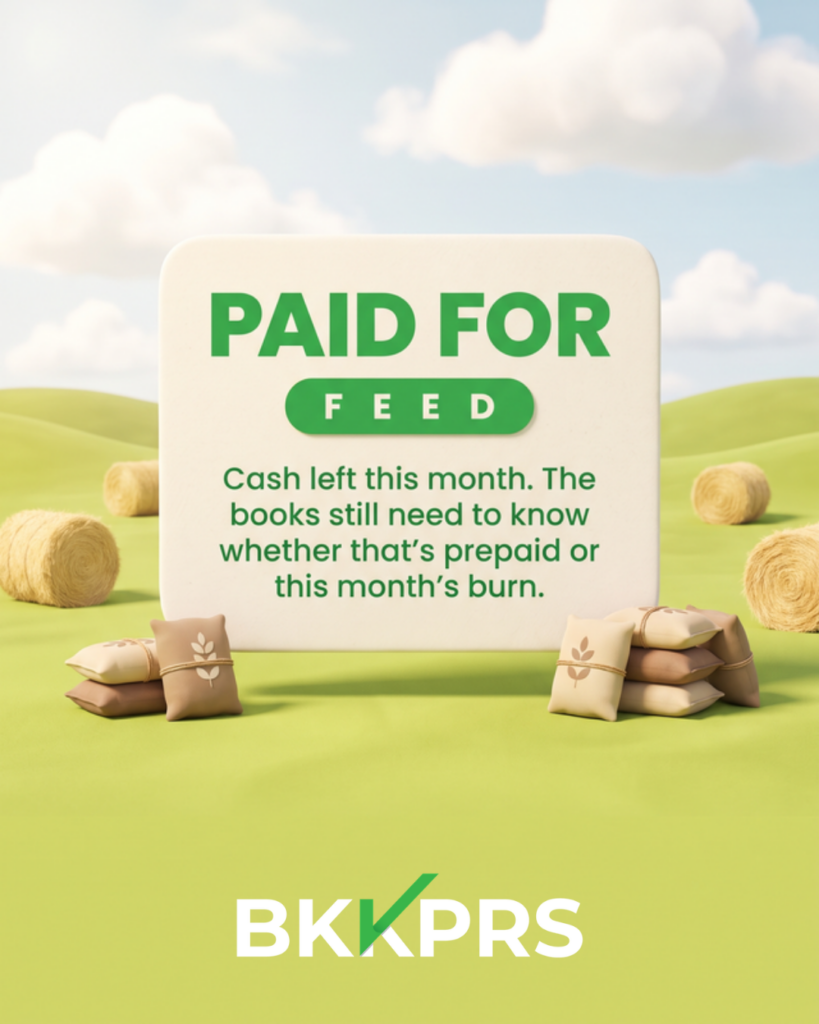
For a lot of Texas Hill Country places, winter hay and supplement are a September–October decision. Paying now protects the herd. It is smart operations. It is not, by itself, a complete books answer.
Cash timing and books timing are different questions. Prepaid feed often starts on the balance sheet and burns as the animals use it. Let the books follow the herd.
Why ranches buy early
Feed availability, delivery windows, and weather risk push purchases ahead of the cold. Texas A&M AgriLife and other seasonal education programs talk winter livestock feeding on that calendar for a reason. The operational choice is early. The books choice is still: what did we buy vs what will we use this period?
Prepaid vs this month’s burn
Dumping the whole load to expense on buy day can make September look terrible and January look oddly fine. Never expensing what the herd already ate does the opposite. Either way, the winter P&L stops explaining a tight month.
IRS farmer guidance is clear that expenses paid in advance are generally not deducted far enough ahead to create an asset that stretches well beyond the year. Farmers also have special prepaid farm supply and prepaid livestock feed rules. This post is books timing literacy, not a tax election pitch. Talk elections through with your tax pro. On the books side, separate prepaid (or inventory lots) from period expense and burn what the herd uses.
A simple schedule before January is a mystery
Track what you paid, tons or lots on hand, and the months you expect to feed. Expense what goes through the cattle. Leave what’s still stacked as prepaid or inventory, depending how you track lots. Update the schedule when a load arrives and when a month’s burn is real.
You do not need a fancy system. You need one page your January self can read.
Where owners get sideways
One invoice, one big expense, no burn schedule. Or a perfect burn schedule that never posts. Or mixing mineral, hay, and cake in one catch-all so nobody can explain the month. Seasonal buying deserves seasonal books, not a single dump.
Keep feed timing honest
Seasonal context only. Not tax advice. Let the books follow the herd.
Sources
Texas A&M AgriLife: Winter livestock feeding (seasonal context): https://agrilifetoday.tamu.edu/event-advance/winter-livestock-feeding-webinar/
IRS Publication 225, Farmer’s Tax Guide (prepayment / prepaid farm supplies and livestock feed timing; recordkeeping): https://www.irs.gov/publications/p225
IRS Publication 538, Accounting Periods and Methods (expenses paid in advance; 12-month rule framing): https://www.irs.gov/publications/p538